Carnation and snowdrop tattoo sketches
Drawn from our botanical illustrations, so the petals and leaves are the real plant's. Under each: what an artist should keep when simplifying it, and the sketch to download.
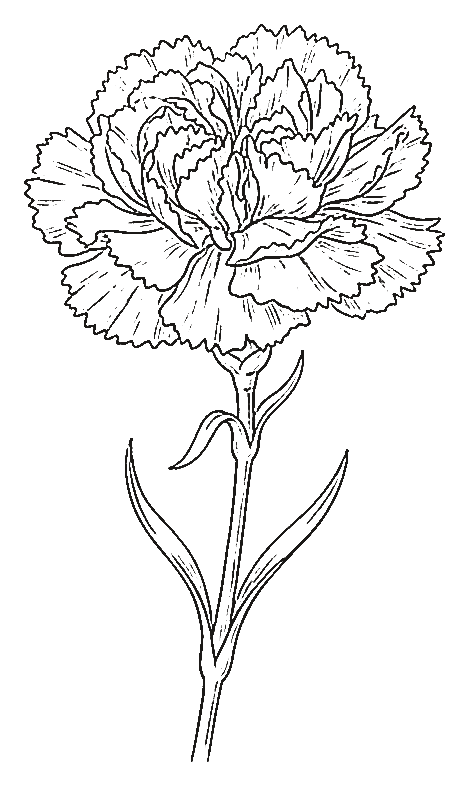
Carnation Dianthus caryophyllus
What the drawing should get right
- Frilly, serrated petal edges: the zigzag outline is what reads as a carnation
- Usually fully double, the petals packed into a rounded head
- A long cylindrical calyx under the head, where the petals come out
- Narrow, strap-like leaves in opposite pairs, from swollen joints on the stem
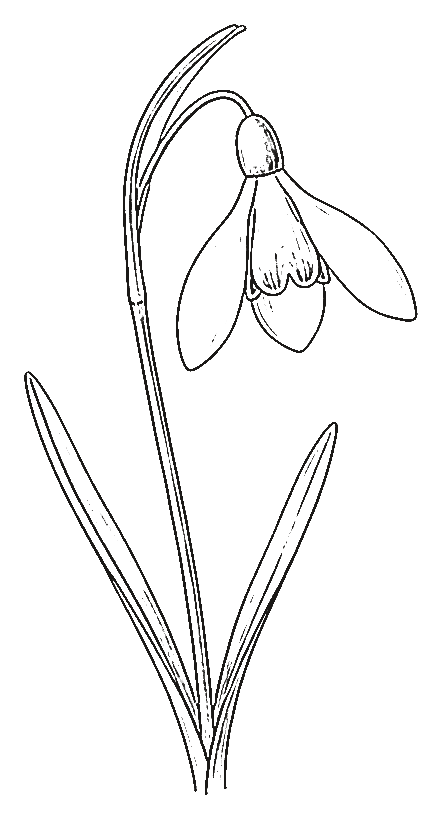
Snowdrop Galanthus nivalis
What the drawing should get right
- One white bell per stem, hanging down
- Six tepals: three long outer ones and three short inner ones
- A green mark at the tip of each inner tepal, an upturned V
- Two or three narrow, gray-green leaves from the base
- A small plant, about 3 to 10 inches tall, so a small design is true to life
The two January flowers could hardly be more different on skin. The carnation is all edges: its frilled, serrated petals are what make it read as a carnation. The snowdrop is all outline: a single white bell hanging from its stalk, with a small green mark on the inner tepals.
January birth flower tattoo ideas in three styles
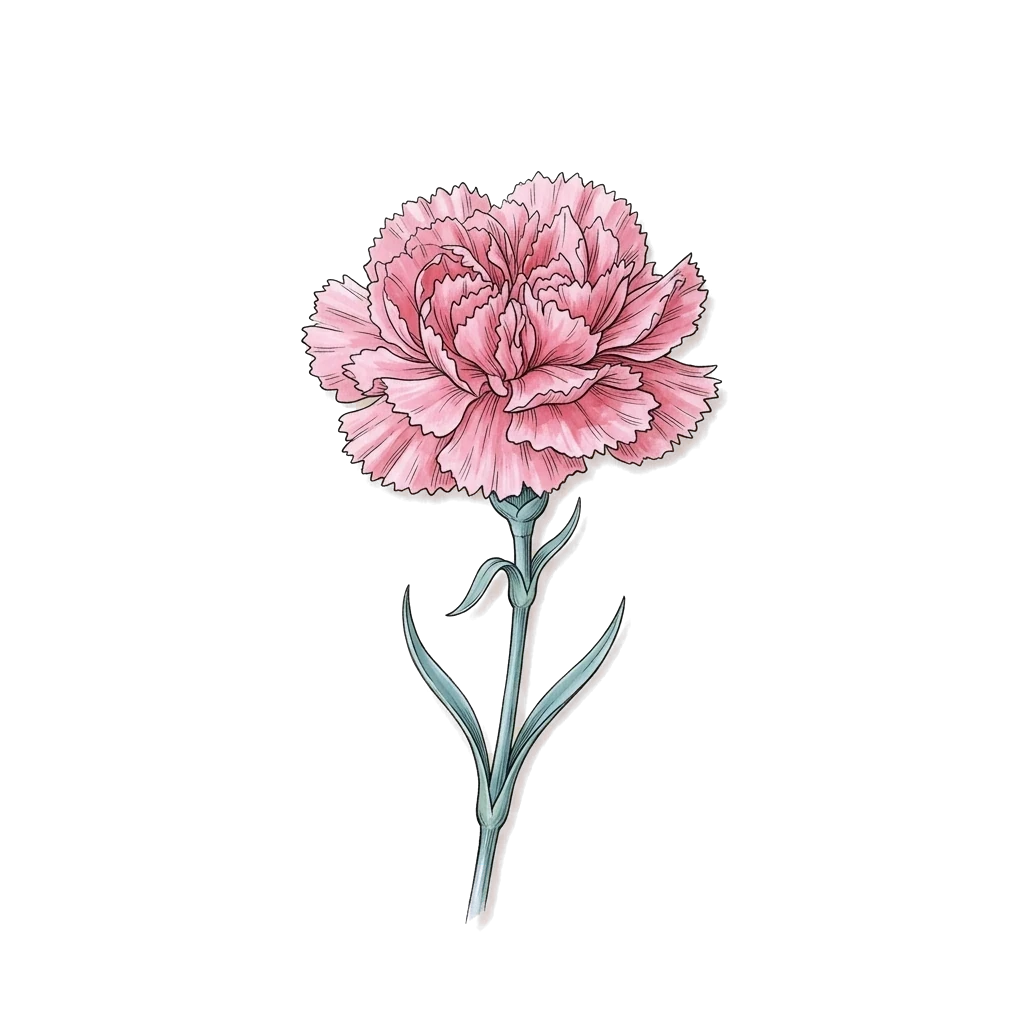
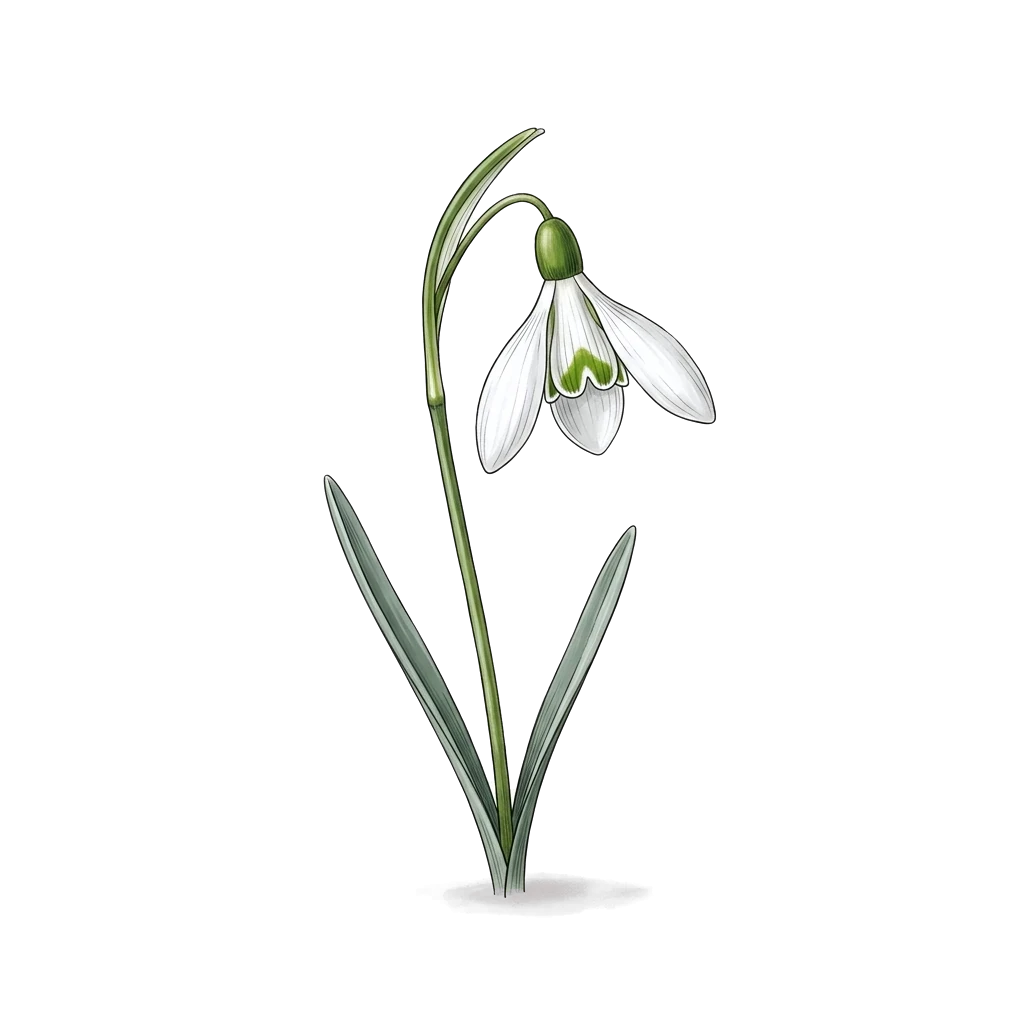
The same drawing changes character with the style. Fine line keeps every ruffle and vein. Watercolor adds the flower’s own colors as loose washes behind the lines. Color botanical fills the whole flower in, like a page from a field guide.
Carnation
-
Fine line
-
Watercolor
-
Color botanical
Snowdrop
-
Fine line
-
Watercolor
-
Color botanical
- Fine line suits both flowers, and the snowdrop especially: it has few lines to lose.
- Watercolor works best on the carnation, because the color is the message. Pink stands for a mother’s love, dark red for deep love and white for remembrance, while yellow means disappointment. Our guide to carnation colors has the full list.
- Color botanical gives the carnation’s long calyx and paired leaves their weight. On a snowdrop, the only color is the green mark, so a single touch of green is enough.
- Minimalist designs keep only an outline. For the snowdrop that can be three strokes, the stalk, the bell and one leaf; for the carnation keep the zigzag edge, or it reads as a generic flower.
Combining January flowers with other months
A carnation and snowdrop tattoo covers the whole month, and a family piece can add the flowers of a partner’s or children’s months. Tick the months below to see them gathered.
Tick a month above to add its flowers.

January

January

February

February

March

April

April

May

May

June

June

July

July

August

August

September

September

October

October

November

December

December
Mixing months works best when the flowers differ in shape. The snowdrop’s drooping bell sits well beside upright flowers, and the carnation’s round head anchors a spray of smaller ones. Keep every flower in the same style and line weight, and let one stem set the direction for the rest.
Placement and size for a January tattoo
Let the flower’s shape choose the spot. The snowdrop is a small plant, so a small design is true to life, while the carnation grows on tall, narrow stems that suit a vertical placement.
| Design | Shape | Where it fits |
|---|---|---|
| One snowdrop | Small, hanging, curved stalk | Wrist, ankle, behind the ear, the side of a finger |
| Snowdrop cluster | A low group of bells | Collarbone, the back of the neck |
| Carnation head | Round and frilled | Shoulder, upper arm, the back of the calf |
| Carnation on its stem | Tall and narrow | Forearm, ribs, along the spine |
| Carnation and snowdrop | Upright beside hanging | Forearm or upper arm, stems crossed low |
Fine details need space. If the carnation must be small, draw fewer petal layers with a clear zigzag edge rather than every ruffle.