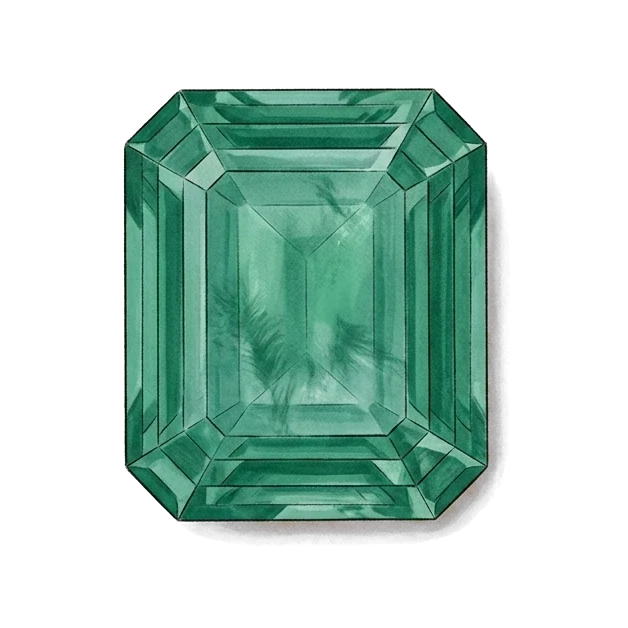
What does the May birthstone mean?
Emerald’s name goes back to the ancient Greek smaragdos, “green gem.” As the stone of spring, it stands for rebirth and love, and the May verse Kunz recorded promises its wearer will be “a loved and happy wife.”
Emeralds have long belonged to the powerful: Cleopatra reportedly favored them, and they were prized by Egyptian pharaohs and Inca emperors. The Roman writer Pliny the Elder wrote that nothing is greener, and said gem cutters rested their eyes by looking at emeralds.
Legend also credited the emerald with revealing the future and exposing a lover’s false promises. These are only legends, but they explain why the stone was so often given as a love token. More of them, from King Solomon’s four stones to emerald in the Bible, are in our guide to emerald meaning and lore.
May birthstone color: emerald green
Emerald is about as green as a gem gets, and small differences in hue make a big difference to the price. Colombia, which has mined fine emeralds for more than 500 years, produces the whole range:
- Muzo: darker, pure green.
- Chivor: lighter, slightly bluish green.
- Coscuez: slightly yellowish green.
Zambia’s emeralds tend to be darker and bluish green, and Brazil, Pakistan and Afghanistan add to the supply.
-
 Green
-
 Bluish green
Is emerald good for everyday wear?
| Hardness | 7.5–8 on the Mohs scale |
|---|---|
| Everyday ring? | Everyday, with care Fine in a ring if you take it off for chores and sports. Safest in earrings and pendants. |
| Family | Beryl |
| Main sources | Colombia, Zambia, Brazil, Pakistan, Afghanistan |
| Treatments | Usually treated. Oil, wax or resin fills surface-reaching fractures, and some pale stones are dyed. |
| Lab-grown | Yes |
| Anniversary | 20th and 35th wedding anniversary |
Emerald is hard, at 7.5 to 8, but harder diamonds can still scratch it. The bigger risk is its fractures: knocks, heat and harsh chemicals can widen them or damage the filler. Choose protective settings like a bezel for rings, or save emeralds for earrings and pendants.
How to buy an emerald: treatments, lab-grown and prices
Most emeralds are treated. Oils, waxes or resins fill surface-reaching fractures, and the amount varies from minor to significant. Paler stones with many fractures may be dyed green. Ask what was used and how much, because it affects both price and care.
| Type | What to know |
|---|---|
| Natural | Mined. Usually treated. Oil, wax or resin fills surface-reaching fractures, and some pale stones are dyed. |
| Lab-grown | Real emerald, made in a lab. Sellers must say it’s lab-grown. |
| Type | Price |
|---|---|
| 1–2 carats | $80–$1,500 |
| Over 2 carats | $80–$3,500 |
Prices vary with size, color, clarity and seller. They’re a guide to what shops ask, not a valuation or an investment view.
Size raises the price steeply: a 3-carat emerald can cost about six times as much as a 1-carat stone of the same quality, not three times.
How to clean and care for emerald
Cleaning emerald
- Warm soapy water, soft brush
- Safe
- Ultrasonic cleaner
- Never
- Steam cleaner
- Not recommended
Avoid heat, sudden pressure changes and harsh chemicals. Even hot dishwater can damage filled stones.
Clean emeralds gently with a soft brush and warm soapy water. Never put one in an ultrasonic cleaner, where vibration and heat can make the filler seep out of the fractures, and avoid heat, sudden changes in air pressure and harsh chemicals.
May birthstone gift ideas
-
Emerald stud earrings
Earrings keep emeralds away from knocks, so they’re the safest way to wear one every day.
-
A bezel-set ring
A rim of metal around the stone protects its edges if you want an emerald ring.
-
A lab-grown emerald
The same green beryl at a lower price: a sensible choice for a first emerald.
-
A 20th- or 35th-anniversary gift
Emerald is the traditional gem for both anniversaries.
Emerald colors for parties and design
The emerald birthstone gives May birthdays a bold green to build a palette around. Here are the shades as hex and RGB codes.
- Green Emerald #1F8A5B rgb(31, 138, 91)
- Bluish green Emerald #1E7F72 rgb(30, 127, 114)
Every month’s stones in one palette, with a free download: birthstone colors by month.