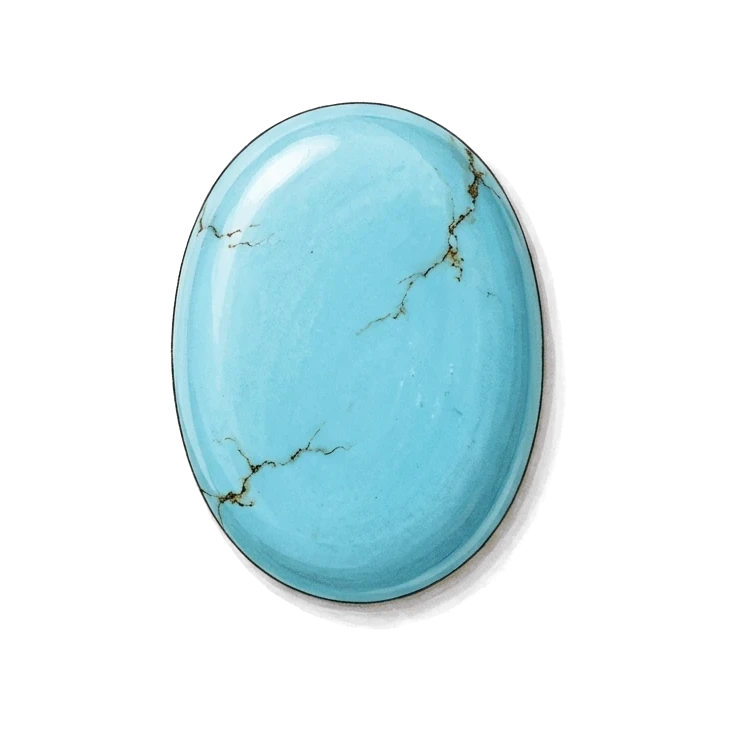
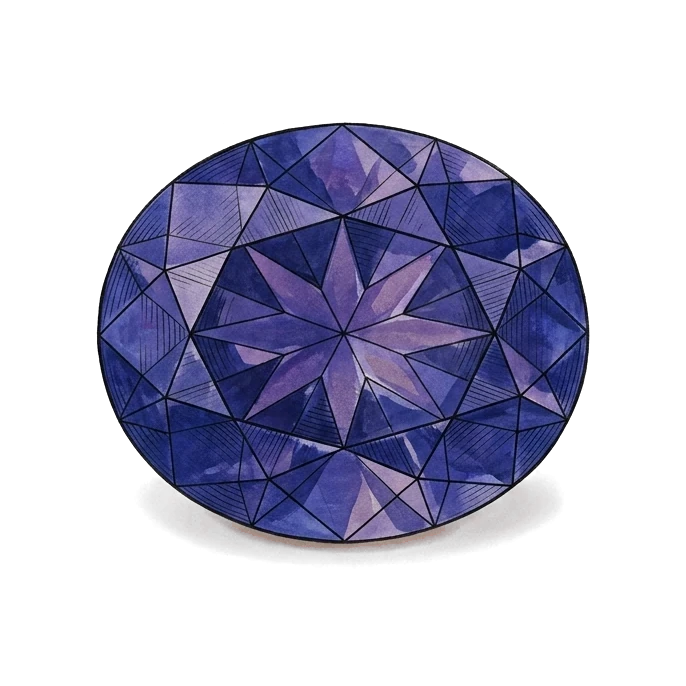
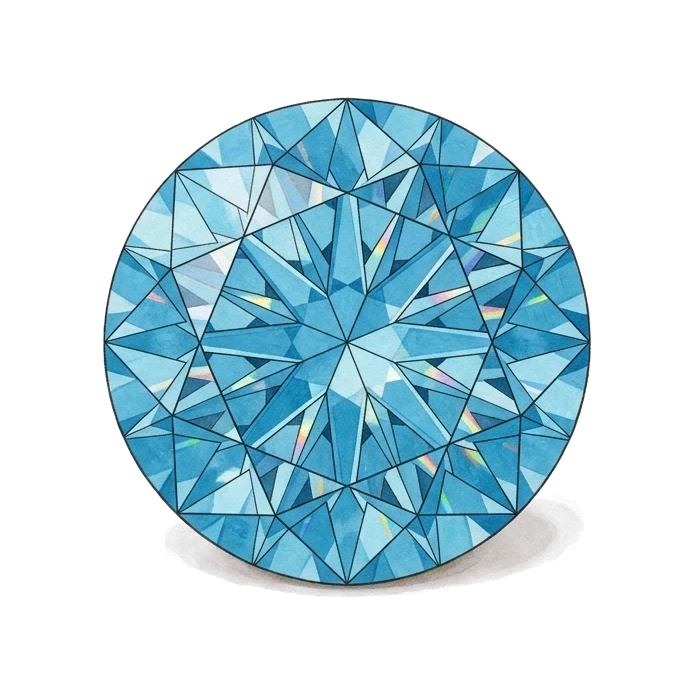
Turquoise, tanzanite or zircon: which December birthstone is yours?
Any of the three. Turquoise was on the first US list in 1912, with lapis lazuli as its alternate. Zircon joined in 1952, and tanzanite in 2002. Kunz’s older “Sentiments of the months” list gave December ruby.
| Stone | Mohs | Everyday ring? |
|---|---|---|
Turquoise On the list since 1912
| 5–6 | |
Tanzanite On the list since 2002
| 6–7 | |
Zircon On the list since 1952
| 6–7.5 |
Turquoise is the classic, an opaque blue with thousands of years of history. Tanzanite has a rich violet-blue, and zircon gives you plenty of sparkle for less.
What do the December birthstones mean?
Turquoise: protection
Turquoise is one of the oldest gems in use. Egyptian rulers wore it, and Chinese artisans carved it more than 3,000 years ago. Folklore credits it with protection, from falls in some traditions and from evil in Tibet, and Native American peoples including the Apache, Pueblo and Hopi hold their own beliefs about it.
Its history from Egypt to the Southwest is in our guide to turquoise meaning and lore.
Tanzanite: a modern stone
Tanzanite was discovered in the 1960s, a blue to violet variety of the mineral zoisite. It was named after Tanzania, its only commercial source, and Tiffany & Co. launched it with an advertising campaign in 1968. It’s too new to have any old lore.
How a Tanzanian find became a December birthstone in under 40 years is told on our tanzanite meaning page.
Zircon: wisdom and prosperity
Colorless zircon was long mistaken for diamond. In the Middle Ages it was thought to bring deep sleep and ward off evil spirits, and it is one of the nine navaratna gems in Hinduism.
Its old names and its place among the oldest minerals on Earth are in our guide to the zircon stone.
December birthstone color: three shades of blue
- Turquoise: blue to green, often with dark veins of the host rock, called matrix. Its shades, and the web color named after it, are in our guide to turquoise color.
- Tanzanite: blue to violet. The purest blues are the most valued.
- Zircon: red, orange, yellow, brown, green, blue and colorless. Blue zircon was a Victorian favorite.
-
 Robin’s egg blue
-
 Green-blue
-
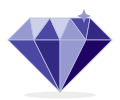 Violet-blue
-
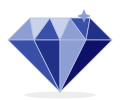 Blue
-
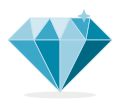 Blue
-
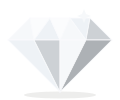 Colorless
-
 Golden yellow
Can you wear turquoise, tanzanite and zircon every day?
| Hardness | 5–6 on the Mohs scale |
|---|---|
| Everyday ring? | Occasional wear Too soft or fragile for a daily ring. Best in earrings, pendants and rings for special days. |
| Family | Turquoise |
| Main sources | China, United States (Arizona, Nevada), Iran |
| Treatments | Most is stabilized with resin to harden it, and some is dyed or waxed. Ask before you buy. |
| Lab-grown | Gilson’s lab-made turquoise was the only true synthetic on the market in a 1983 Gems & Gemology study, though it held other compounds too. Some labs count it an imitation. |
| Anniversary | 11th wedding anniversary |
| Hardness | 6–7 on the Mohs scale |
|---|---|
| Everyday ring? | Everyday, with care Fine in a ring if you take it off for chores and sports. Safest in earrings and pendants. |
| Family | Zoisite |
| Main sources | Tanzania (Merelani Hills only) |
| Treatments | Almost all is heated from brownish zoisite, and the color is permanent. A few stones are coated to deepen their color. |
| Lab-grown | None is known to date, though imitations are common. |
| Anniversary | 24th wedding anniversary |
| Hardness | 6–7.5 on the Mohs scale |
|---|---|
| Everyday ring? | Everyday, with care Fine in a ring if you take it off for chores and sports. Safest in earrings and pendants. |
| Family | Zircon |
| Main sources | Sri Lanka, Australia, Myanmar, Vietnam, Cambodia |
| Treatments | Blue and colorless zircon are almost always heated brown zircon, and some golden, orange and red zircon is heated too. A few heated stones drift back toward brown after long, bright light. |
| Lab-grown | Zircon has been grown in labs for research, but lab-grown zircon has no known use in jewelry. “Synthetic zircon” sold online may be cubic zirconia. |
None of the three is ideal for a ring worn every day. Turquoise, at 5 to 6, is soft. Tanzanite, at 6 to 7, scratches easily and can crack with a sudden change in temperature. And zircon scuffs with rough wear. Earrings and pendants suit all three best.
How to buy turquoise, tanzanite and zircon
Much turquoise is dyed or stabilized with epoxy or acrylic resin, and some is filled with metal-loaded epoxy that imitates pyrite veins. Nearly all tanzanite is brownish zoisite heated to bring out the blue-violet, a permanent change. Blue and colorless zircon are usually heated too.
| Type | What to know |
|---|---|
| Natural | Mined. Most is stabilized with resin to harden it, and some is dyed or waxed. Ask before you buy. |
| Lab-grown | Gilson’s lab-made turquoise was the only true synthetic on the market in a 1983 Gems & Gemology study, though it held other compounds too. Some labs count it an imitation. |
| Imitation | Dyed magnesite (sometimes sold as “Turkenite”), dyed calcite or dolomite, pressed, dyed powder and, now rarely, dyed howlite. |
| Type | What to know |
|---|---|
| Natural | Mined. Almost all is heated from brownish zoisite, and the color is permanent. A few stones are coated to deepen their color. |
| Lab-grown | None is known to date, though imitations are common. |
| Imitation | Glass and lab-made forsterite are the most common. YAG and lab-grown corundum have been used too. |
| Type | What to know |
|---|---|
| Natural | Mined. Blue and colorless zircon are almost always heated brown zircon, and some golden, orange and red zircon is heated too. A few heated stones drift back toward brown after long, bright light. |
| Lab-grown | Zircon has been grown in labs for research, but lab-grown zircon has no known use in jewelry. “Synthetic zircon” sold online may be cubic zirconia. |
| Imitation | Cubic zirconia is a different, lab-made material that imitates diamond. Don’t confuse the two. |
| Type | Price |
|---|---|
| Stabilized | $1–$8 |
| Natural (untreated) | $2–$150 |
| Type | Price |
|---|---|
| Light, 1–2 carats | $70–$150 |
| Medium, 1–2 carats | $110–$350 |
| Deep, 1–2 carats | $150–$500 |
| Deep, 3 carats and up | $400–$1,500 |
| Type | Price |
|---|---|
| Blue, 1–2 carats | $15–$50 |
| Blue, 2–5 carats | $35–$180 |
| Other colors, 1–2 carats | $15–$100 |
Prices vary with size, color, clarity and seller. They’re a guide to what shops ask, not a valuation or an investment view.
Turquoise and zircon are among the least expensive birthstones. Tanzanite costs more, rising with the depth of its color.
How to clean turquoise, tanzanite and zircon
Cleaning turquoise
- Warm soapy water, soft brush
- Safe
- Ultrasonic cleaner
- Never
- Steam cleaner
- Never
Acids can damage it. Cosmetics, skin oils and sweat can discolor it, and high heat can discolor or break it.
Cleaning tanzanite
- Warm soapy water, soft brush
- Safe
- Ultrasonic cleaner
- Never
- Steam cleaner
- Never
It may crack in very high heat or sudden temperature changes.
Cleaning zircon
- Warm soapy water, soft brush
- Safe
- Ultrasonic cleaner
- Not recommended
- Steam cleaner
- Not recommended
Heat can change its color, and UV lamps, such as tanning beds and nail lamps, can turn blue zircon brown. Its facet edges wear, so keep it from rough wear.
All three should be cleaned only with warm soapy water and a soft brush, never with steam or an ultrasonic. Turquoise can also be discolored by cosmetics, skin oils and sweat, so put it on last and wipe it after wearing.
December birthstone gift ideas
-
Turquoise earrings or a pendant
A classic, affordable December gift that keeps a soft stone out of harm’s way.
-
A tanzanite pendant
Its violet-blue shows best in a simple setting, and a pendant protects it.
-
Blue zircon studs
Lots of sparkle for not much money, so they make a good first piece of birthstone jewelry.
-
An 11th- or 24th-anniversary gift
Turquoise marks the 11th wedding anniversary and tanzanite the 24th.
Turquoise, tanzanite and zircon colors for parties and design
All three December stones come in blue, so turquoise, violet-blue and icy zircon make an easy winter palette. The codes for each are below.
- Robin’s egg blue Turquoise #3FB8AF rgb(63, 184, 175)
- Green-blue Turquoise #4FA89A rgb(79, 168, 154)
- Violet-blue Tanzanite #4B47A3 rgb(75, 71, 163)
- Blue Tanzanite #3A4FA8 rgb(58, 79, 168)
- Blue Zircon #3BA7C9 rgb(59, 167, 201)
- Colorless Zircon #EEF2F6 rgb(238, 242, 246)
- Golden yellow Zircon #D9A23A rgb(217, 162, 58)
Every month’s stones in one palette, with a free download: birthstone colors by month.