Capricorn stones, list by list
Capricorn’s old stones are a red gem and two kinds of chalcedony. None of them is the garnet that most charts give the sign today.
| Stone | Whose list |
|---|---|
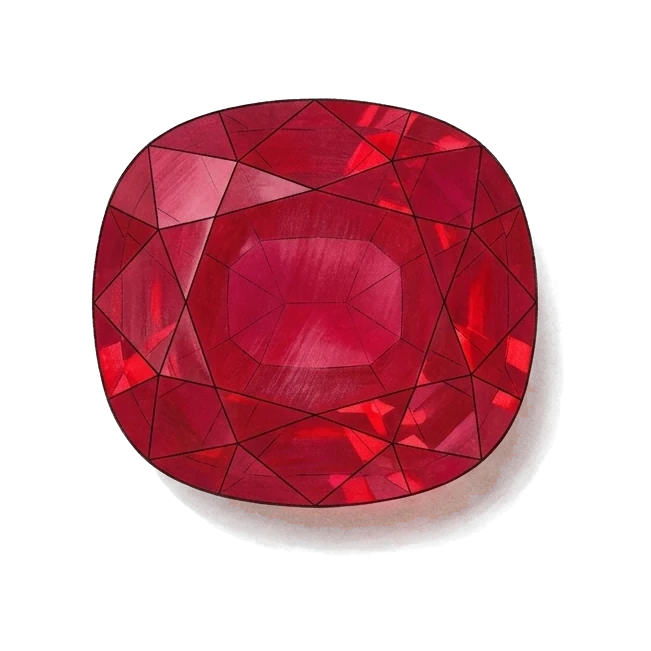
| Ruby | Kunz’s verses (1913). George F. Kunz printed it in 1913 as “Zodiacal Gems,” one stone and a short rhyme for each sign. |
| Chrysoprase | Agrippa’s table (1533). Heinrich Cornelius Agrippa’s book of occult philosophy, printed in 1533, sets twelve stones beside the twelve signs in its table of the number twelve. |
| Chalcedony | The Spanish list (1604). From a 1604 Spanish book on gems by Morales, which Kunz quotes and thought probably came from Arab tradition. |
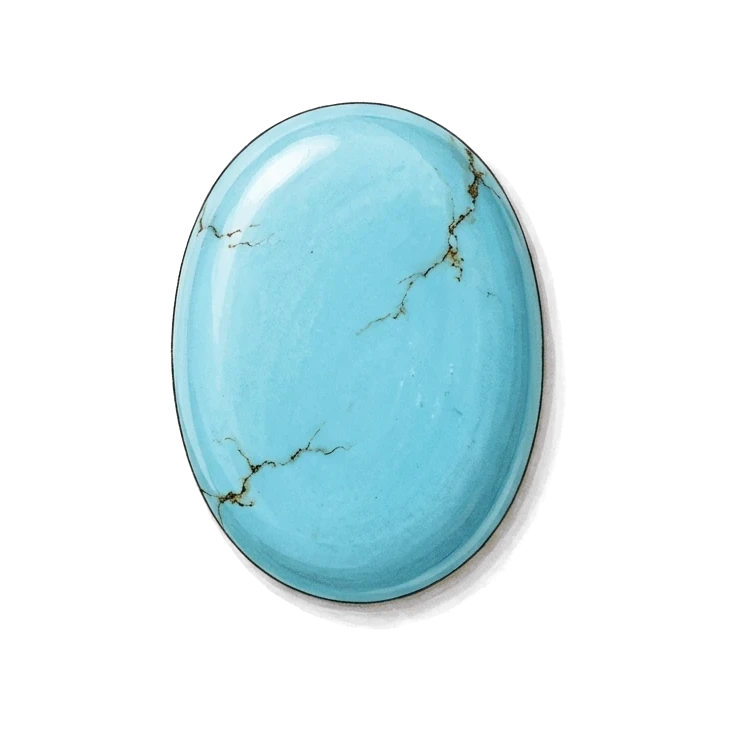
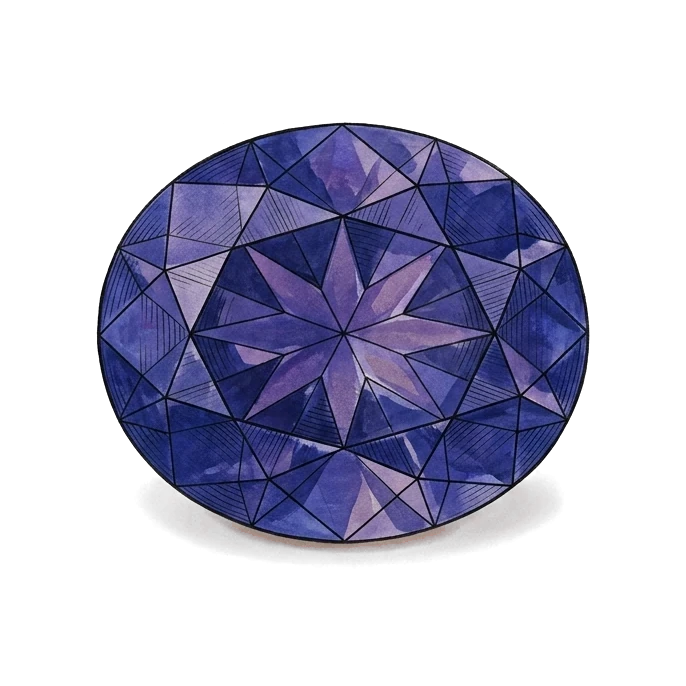
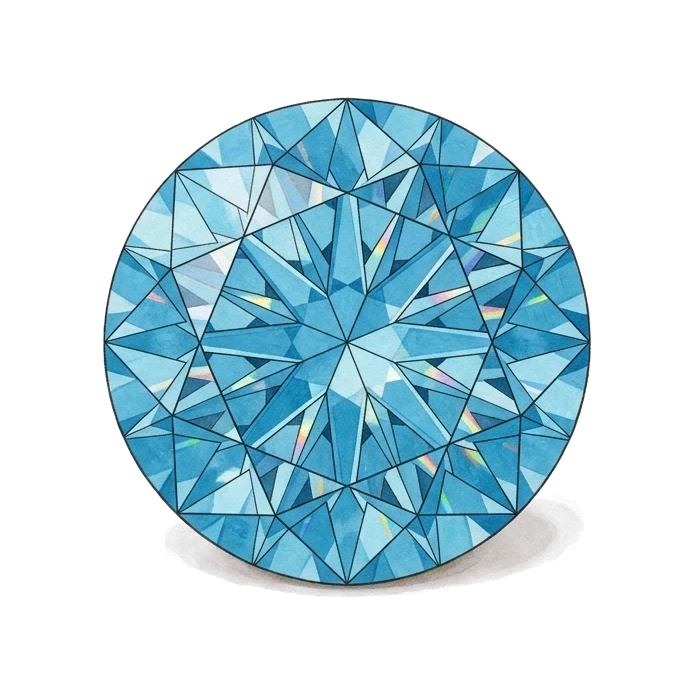
| Turquoise, tanzanite and zircon December 22–31 Garnet January 1–19 | The birth month. The modern US birthstones of December and January, the months Capricorn’s dates fall in. |
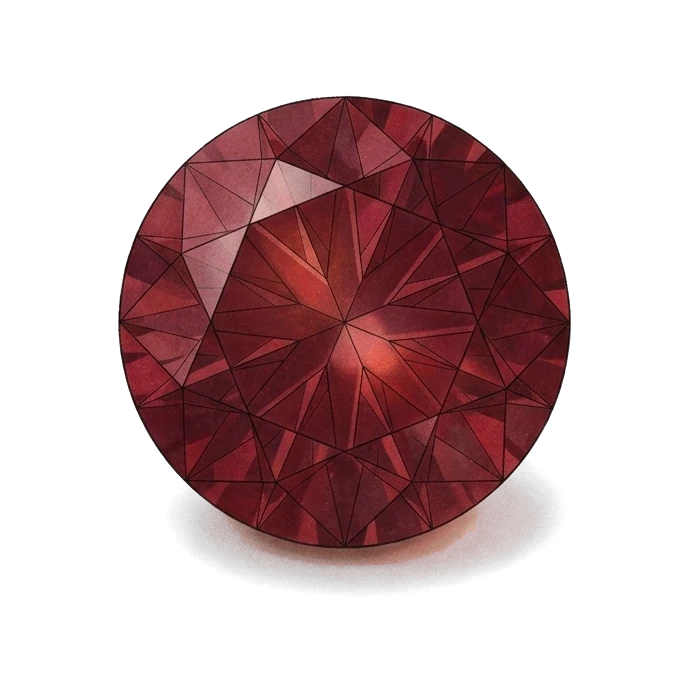
Ruby closes the Capricorn verse Kunz printed: “Those who live in Capricorn / No trouble shall their brows adorn / If they this glowing gem have worn, / The ruby.” It is the Capricorn zodiac stone on the International Gem Society’s table as well.
Ruby, December’s old stone
Kunz’s list of the months gives December ruby and the sign Capricornus. He also records the change that broke the link: the 1912 list moved ruby “from December to July, changing places with the turquoise,” on the idea that a warm-colored gem suited summer. Kunz thought the reverse, “for it is in winter that we seek for warmth.”
Ruby is July’s birthstone today, so the Capricorn verse keeps a December stone that December no longer has.
Chrysoprase and chalcedony
Agrippa’s chrysoprase and the Spanish list’s chalcedony are close relatives. Chalcedony is quartz whose crystals are too small to see without high magnification, and chrysoprase is a translucent green chalcedony colored by nickel, which can look like fine jade.
December Capricorn or January Capricorn
A December Capricorn birthstone is turquoise, tanzanite or zircon. A January Capricorn birthstone is garnet. Capricorn has 10 days in December and 19 in January, so garnet is the month stone most Capricorns share.
Capricorn birthstone colors
The colors split into reds and cool tones: ruby and garnet on one side, chrysoprase green and the blues of chalcedony and the December stones on the other.
-
- Red
- Pinkish red
- Purplish red
-
Chrysoprase, a green chalcedony colored by nickel
- Apple green
-
Chalcedony, quartz made of crystals too small to see, found in many colors
- Pale blue
- Grayish blue
-
- Robin’s egg blue
- Green-blue
-
- Violet-blue
- Blue
-
- Blue
- Colorless
- Golden yellow
-
- Deep red
- Orange
- Green
- Purplish red
Ruby and blue sapphire are one mineral, corundum. Ruby is its most valuable variety, and the Sanskrit name for it, ratnaraj, means king of gems.
Pan’s escape and Ea’s goat-fish
Hyginus gives the sea-goat two stories. In one he is Aegipan, Jupiter’s foster brother, who threw panic into the Titans and hurled shellfish at them instead of stones, which is why he ends in a fish.
In the other, the gods fled the monster Typhon in Egypt by changing shape, and Pan jumped into the river, so that the half under water became a fish and the rest stayed a goat. The same Typhon chased Venus and Cupid into the Euphrates in the story of Pisces.
The goat-fish is much older than the Greeks. In Babylon it was a kindly spirit and the faithful companion of Ea, the god of wisdom, and it came west with the rest of the zodiac.
Augustus and his capricorn
The emperor Augustus made the sign his emblem. Suetonius writes that he published his horoscope and “issued a silver coin stamped with the sign of the constellation Capricornus, under which he was born,” though the same book gives him a September birthday, a puzzle historians still argue over. Coins of the kind survive: the Münzkabinett in Berlin has a silver denarius of Augustus from 18–16 BC with a capricorn, a globe between its forelegs, a rudder below it and a cornucopia on its back. The Metropolitan Museum of Art has a small sardonyx cameo from his reign carved with a double capricorn and his portrait.
Saturn’s sapphire
Ptolemy gave Saturn the two winter signs, Capricorn and Aquarius. Saturn’s gem in India’s navaratna is blue sapphire, so a chart that follows the planets gives Capricorn a stone of the same mineral as its old ruby.
Capricorn dates
Capricorn usually runs from December 22 to January 19, starting at the December solstice, when the Sun turns back north. The solstice comes about six hours later each year and a day earlier in leap years, so December 21 or 22 and January 19 or 20 can fall on either side.