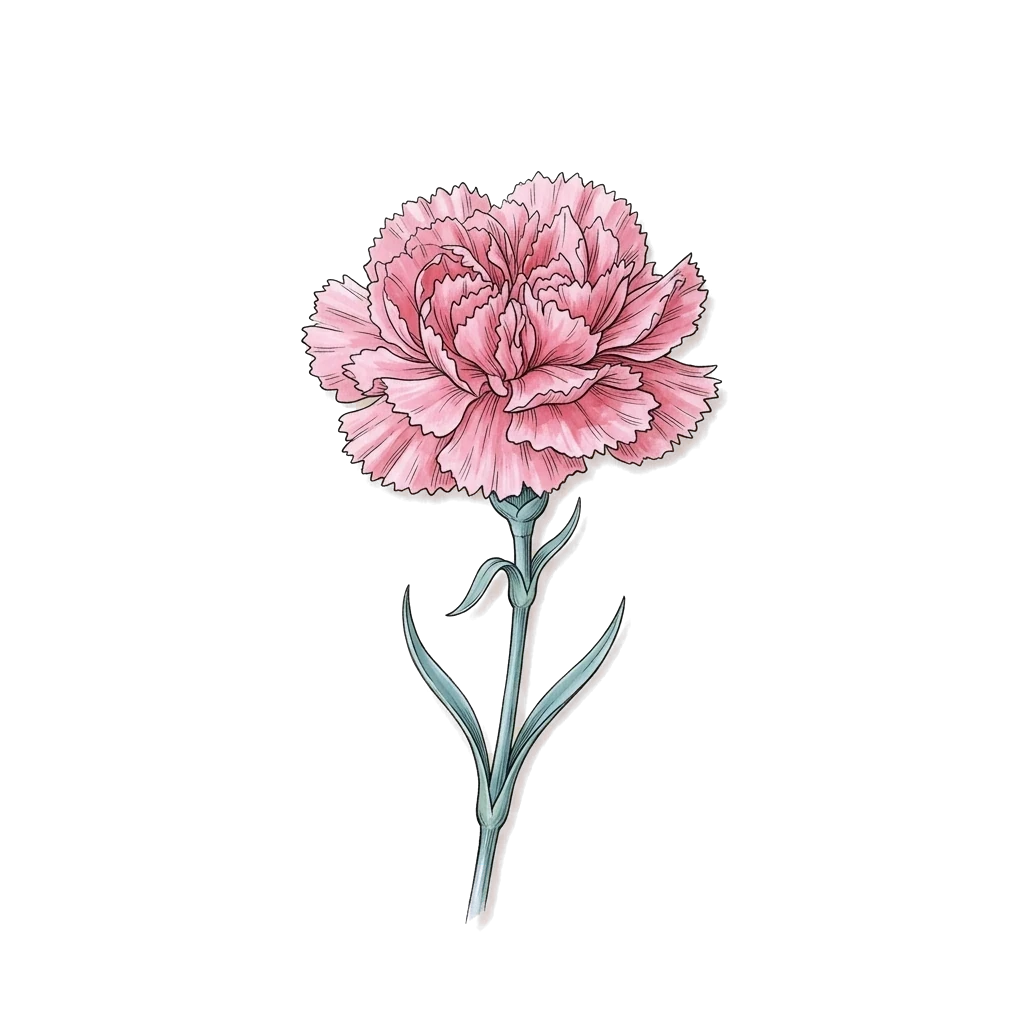
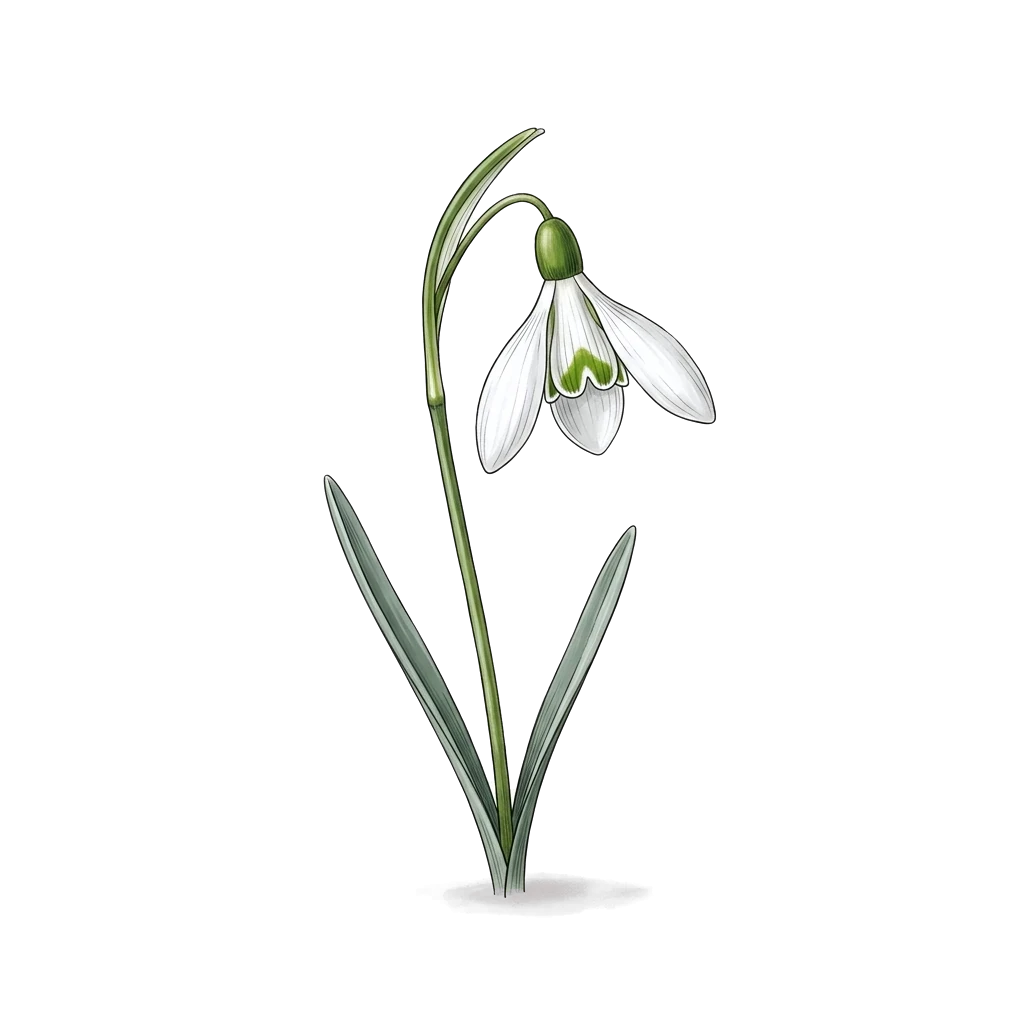
January birth flower meaning by color
Today the carnation stands for love and remembrance, and the snowdrop for hope. Carnations also carry a meaning for each color, and a few of those go back to the Victorian language of flowers: in 1884 a yellow carnation meant disdain and a striped one refusal.
| Color | Meaning today | Victorian (1884) |
|---|---|---|
| Light red | Admiration | |
| Dark red | Deep love 1884: Alas! for my poor heart | |
| Pink | Affection, a mother's love | |
| White | Innocence, pure love, remembrance | |
| Purple | Capriciousness | |
| Yellow | Disappointment, rejection 1884: Disdain |
- White
- Green tips
Striped carnations, in any color, mean regret today. Pink stands for a mother’s love, and carnations are a Mother’s Day staple. The rest of the story, from Renaissance betrothals to Portugal’s revolution, is in our guide to carnation meaning and symbolism.
History and folklore of carnations and snowdrops
Carnations grew wild on the hillsides of Greece and were woven into garlands in ancient Greece and Rome. The genus name, Dianthus, is often translated as “flower of the gods.” Christian legend says the first pink carnation grew from Mary’s tears.
Red carnations became the emblem of Portugal’s Carnation Revolution in the 1970s, and of labor movements on May 1. The carnation is also Ohio’s state flower.
The snowdrop’s genus name, Galanthus, joins the Greek words for milk and flower. One Christian story says an angel turned snowflakes into snowdrops as a sign of hope for Adam and Eve. Because snowdrops grew in graveyards, a single bloom brought indoors was once believed to foretell a death.
In England snowdrops were long called Candlemas bells, after the feast on February 2. Their species, their collectors and how to plant them in the green are on our snowdrop flower page.
Carnation vs. snowdrop: which January birth flower is yours?
| Flower | Meaning | Blooms | Pets |
|---|---|---|---|
Carnation Perennial, often grown as an annual
| Love and remembrance 1884: Woman's love Toxic to dogs, cats and horses | ||
Snowdrop Bulb
| Hope 1884: Hope Not in the ASPCA’s plant list |
The carnation usually comes first on today’s lists, but that doesn’t make it the official one. If you want the birth flower for January that is actually in bloom in January, it’s the snowdrop: it flowers in winter and early spring, while garden carnations bloom in summer.
How to grow carnations and snowdrops
Growing carnation
- Type
- Perennial, often grown as an annual
- Blooms
- Summer
- Sun
- Full sun to part shade
- USDA zones
- 6–9
- Native to
- The Mediterranean
Growing snowdrop
- Type
- Bulb
- Blooms
- Winter to spring
- Sun
- Full sun to part shade
- USDA zones
- 3–9
- Native to
- Europe and southwestern Asia
Carnations like cool summers and moist, gritty, well-drained soil, and can struggle in the heat of a Southern garden. Plant snowdrop bulbs early in the fall in groups of three or four, and let the leaves die back on their own after flowering.
Are carnations and snowdrops poisonous to pets?
Carnation
- Pets
- Toxic to dogs, cats and horses
- People
- Listed as poisonous (low severity) Mild stomach upset and skin irritation.
Snowdrop
- Pets
- Not in the ASPCA’s plant list
- People
- Listed as poisonous (low severity) Nausea and stomach upset if eaten in quantity.
In the US, if a pet may have eaten part of a plant, call your vet or the ASPCA Animal Poison Control Center at (888) 426-4435. If a person has, call Poison Control at 1-800-222-1222.
January birth month flower gift ideas
-
Carnations in a chosen color
Pick the color for the message: pink for affection, white for remembrance, dark red for deep love.
-
A pot of snowdrop bulbs
Snowdrops flower in late winter and can go out into the garden afterwards, coming back every year.
-
A botanical print of both
A print of a carnation and a snowdrop covers the whole month, and suits a home with cats or dogs.
-
Birth flower jewelry
A small engraved or enameled carnation or snowdrop pendant is a gift that lasts longer than a bouquet.
Tattoo ideas for January’s flowers
-
A fine-line snowdrop
One drooping bell on an arching stem with two or three narrow leaves fits the wrist, ankle or behind the ear.
-
A carnation in color
Ruffled, serrated petals suit watercolor or botanical styles. Pick the color for its meaning.
-
A January bouquet
A carnation and snowdrop tied together, or joined by the birth flowers of a partner or children.
-
A long stem down the forearm
Carnations grow on long, stiff stems, which suit a vertical design on the forearm or along the ribs.
For fine-line sketches of the carnation and snowdrop you can download, the same designs in three styles, and placements, see our January birth flower tattoo guide.
Carnation and snowdrop colors for parties and design
Carnation pinks and reds with snowdrop white make a soft palette for the middle of winter. Here are the hex and RGB codes.
- Light red Carnation #C8243C rgb(200, 36, 60)
- Dark red Carnation #8E1A2E rgb(142, 26, 46)
- Pink Carnation #F28DA6 rgb(242, 141, 166)
- White Carnation #F5F1EA rgb(245, 241, 234)
- Purple Carnation #8E4FA0 rgb(142, 79, 160)
- Yellow Carnation #F2CF4A rgb(242, 207, 74)
- White Snowdrop #F4F6F2 rgb(244, 246, 242)
- Green tips Snowdrop #6E9B5A rgb(110, 155, 90)