Opal or tourmaline: which October birthstone is yours?
Either one. Each is an official birthstone for October. Opal and tourmaline were both on the first US list in 1912, and the 1952 update named pink tourmaline as the October stone. Kunz’s older “Sentiments of the months” list gave October beryl instead.
| Stone | Mohs | Everyday ring? |
|---|---|---|
Opal On the list since 1912
| 5–6.5 | |
Tourmaline On the list since 1912
| 7–7.5 |
Go for opal if you love its shifting rainbow flashes, or tourmaline if you want a tougher stone, in pink or almost any other color.
What do the October birthstones mean?
Opal birthstone: hope, purity and truth
Opal’s name traces to the Sanskrit upala, “precious stone,” and the Roman opalus. Bedouins believed it held lightning that fell in storms, and ancient Greeks linked it to prophecy. Europeans long saw it as a symbol of hope, purity and truth, and it was once thought to hold the virtues of every colored stone.
The idea that opal is unlucky is modern: Kunz traced it to a careless reading of Walter Scott’s novel Anne of Geierstein. Pliny’s opal of Nonius and the rest of its lore are in our guide to opal meaning and its myths.
Tourmaline birthstone: artistic inspiration
Tourmaline’s name comes from the Sinhalese toramalli, “stone with mixed colors.” Ancient mystics believed it could inspire artistic expression.
It was often mistaken for other gems: a red tourmaline in the Russian crown jewels was long thought to be a ruby. How it got its name, and why it was called the electric stone, is in our guide to tourmaline meaning.
October birthstone color: rainbow flashes and pink
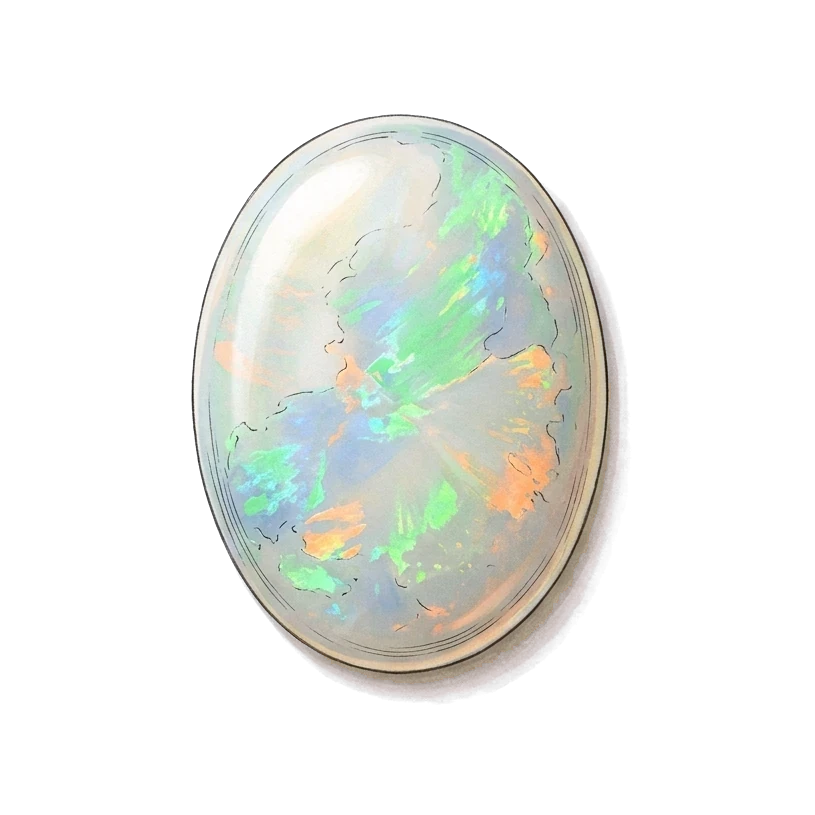
Opal is prized for play-of-color, flashes of rainbow hues that shift as the stone moves. Its main types include white, black, boulder and fire opal.
Australia is the biggest source, with black opal from Lightning Ridge, and Ethiopia and Mexico add white, brown and fiery orange stones. Each type is shown in our guide to opal colors.
Tourmaline comes in an unusually wide range:
- Rubellite: pink to red.
- Chrome tourmaline: emerald green.
- Paraíba: neon green to blue-violet, first found in Brazil in the late 1980s.
- Multicolored: stones with two or more colors in one crystal, like watermelon tourmaline, pink in the center and green outside.
Rubellite, Paraíba and the rest have their own swatches in our guide to tourmaline colors.
-
 White with play-of-color
-
 Black
-
 Fire orange
-
 Pink
-
 Green
-
 Blue
Can you wear opal and tourmaline every day?
| Hardness | 5–6.5 on the Mohs scale |
|---|---|
| Everyday ring? | Occasional wear Too soft or fragile for a daily ring. Best in earrings, pendants and rings for special days. |
| Family | Opal (hydrated silica) |
| Main sources | Australia, Ethiopia, Mexico, Brazil, United States |
| Treatments | Some opal is impregnated with oil, wax or plastic, or darkened by sugar or smoke treatment. Doublets and triplets are thin slices of opal glued to a backing. |
| Lab-grown | Yes. The Gilson company has made it since the 1970s, after it found a way to settle and press tiny silica spheres into the stacked grid that makes play-of-color. |
| Anniversary | 14th wedding anniversary |
| Hardness | 7–7.5 on the Mohs scale |
|---|---|
| Everyday ring? | Great for everyday Hard and tough enough for a ring worn every day. |
| Family | Tourmaline group |
| Main sources | Brazil, Afghanistan, Pakistan, Nigeria, Mozambique, United States (California, Maine) |
| Treatments | Heating and irradiation are the main treatments, and both are often undetectable. Irradiated color can fade with heat or bright light, and some stones have fractures filled with oil or resin. |
| Lab-grown | No synthetic gem tourmaline is sold. It has been grown only in research labs. |
| Anniversary | 8th wedding anniversary |
Tourmaline, at 7 to 7.5, is generally fine for everyday wear. Opal, at 5 to 6.5, scratches more easily and can crack with heat or sudden temperature changes, so wear opal rings with care.
How to buy opal and tourmaline
Opal is sold as solid stones and as doublets and triplets: thin slices of opal glued to a backing, with a clear quartz dome on triplets. They cost less, but water can weaken the glue. Some opal is also impregnated with oil, wax or plastic, so ask what you’re buying.
Tourmaline’s price depends heavily on color: green is among the most affordable, while vivid blues cost several times more.
| Type | What to know |
|---|---|
| Natural | Mined. Some opal is impregnated with oil, wax or plastic, or darkened by sugar or smoke treatment. Doublets and triplets are thin slices of opal glued to a backing. |
| Lab-grown | Real opal, made in a lab. The Gilson company has made it since the 1970s, after it found a way to settle and press tiny silica spheres into the stacked grid that makes play-of-color. |
| Imitation | Glass, such as the foil-filled Slocum stone of the early 1970s, and plastic, some of it sold as “Opalite.” |
| Type | What to know |
|---|---|
| Natural | Mined. Heating and irradiation are the main treatments, and both are often undetectable. Irradiated color can fade with heat or bright light, and some stones have fractures filled with oil or resin. |
| Lab-grown | No synthetic gem tourmaline is sold. It has been grown only in research labs. |
| Imitation | Glass has been cut to look like Paraíba tourmaline crystals, though GIA calls this unusual. |
| Type | Price |
|---|---|
| Fire opal | $15–$100 |
| Ethiopian | $20–$200 |
| Australian | $20–$1,000 |
| Doublet | $10–$100 |
| Type | Price |
|---|---|
| Green, 1 carat | $15–$80 |
| Pink, 1 carat | $60–$150 |
| Rubellite (red), 1 carat | $100–$400 |
| Blue, 1 carat | $200–$1,000 |
Prices vary with size, color, clarity and seller. They’re a guide to what shops ask, not a valuation or an investment view.
How to clean opal and tourmaline
Cleaning opal
- Warm soapy water, soft brush
- Safe
- Ultrasonic cleaner
- Not recommended
- Steam cleaner
- Not recommended
Warm soapy water is the only safe method. Keep it from high heat and sudden temperature changes, and don’t soak doublets or triplets.
Cleaning tourmaline
- Warm soapy water, soft brush
- Safe
- Ultrasonic cleaner
- Not recommended
- Steam cleaner
- Not recommended
High heat can change its color, and sudden temperature changes can crack it.
Warm soapy water is the only safe way to clean opal. Keep it away from high heat and sudden temperature changes, don’t soak doublets or triplets, and store it on its own so harder gems can’t scratch it. Clean tourmaline with warm soapy water and a soft brush. Light and most chemicals won’t harm it, but heat can.
October birthstone gift ideas
-
An opal pendant
Pendants keep opal away from knocks and show off its play-of-color.
-
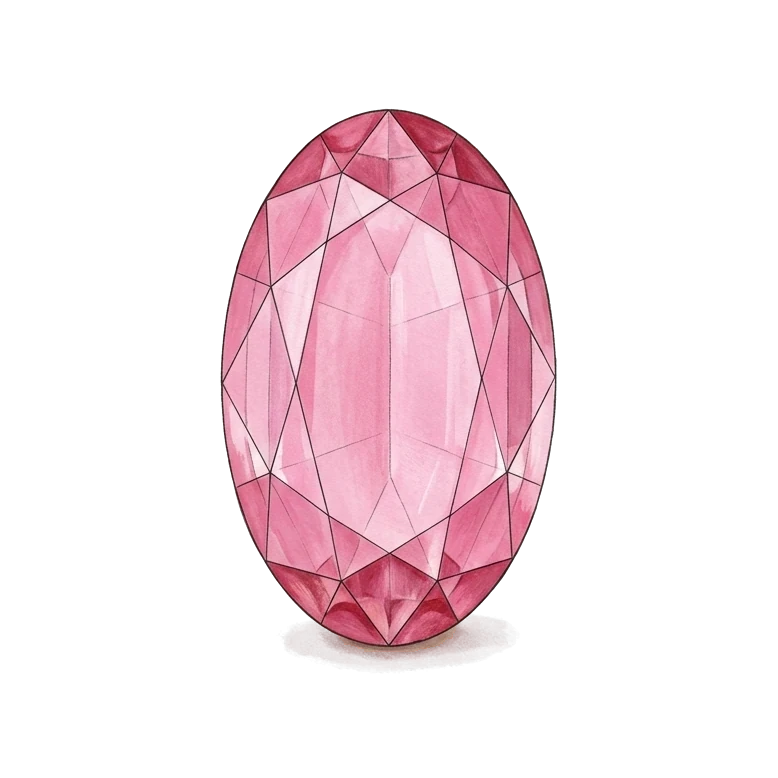
A pink tourmaline ring
Hard enough for daily wear, and the shade the 1952 list named for October.
-
Watermelon tourmaline
Pink and green in a single stone, for something a little unusual.
-
An 8th- or 14th-anniversary gift
Tourmaline marks the eighth wedding anniversary and opal the 14th.
Opal and tourmaline colors for parties and design
Opal’s milky white and fire orange with tourmaline pink and green make a warm autumn palette. Copy any of the codes below.
- White with play-of-color Opal #EEF1F4 rgb(238, 241, 244)
- Black Opal #22262E rgb(34, 38, 46)
- Fire orange Opal #E66B2B rgb(230, 107, 43)
- Pink Tourmaline #E05A8C rgb(224, 90, 140)
- Green Tourmaline #3E8E5E rgb(62, 142, 94)
- Blue Tourmaline #2E7A9A rgb(46, 122, 154)
Every month’s stones in one palette, with a free download: birthstone colors by month.