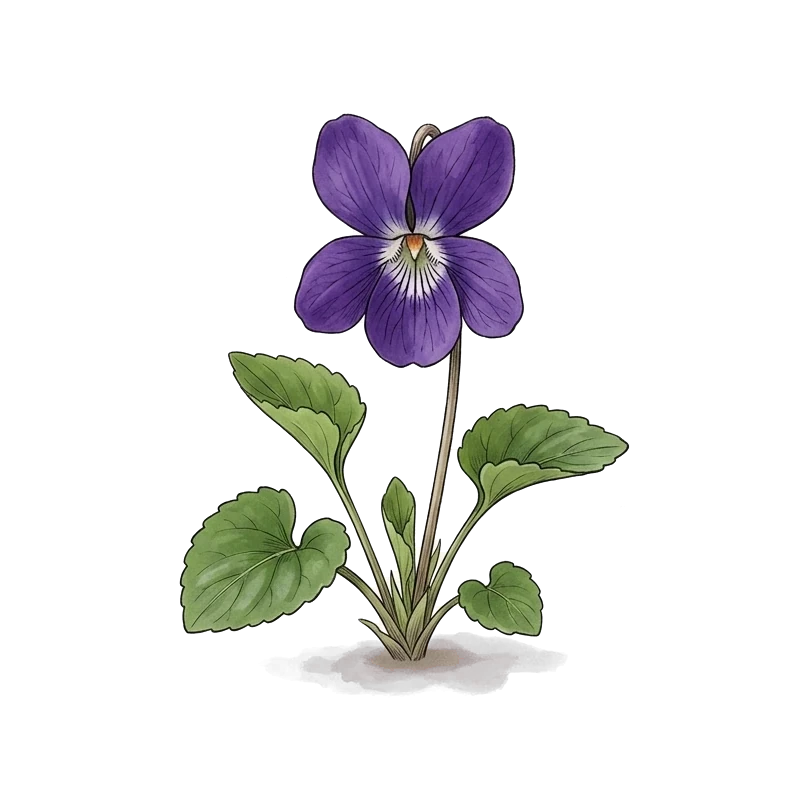
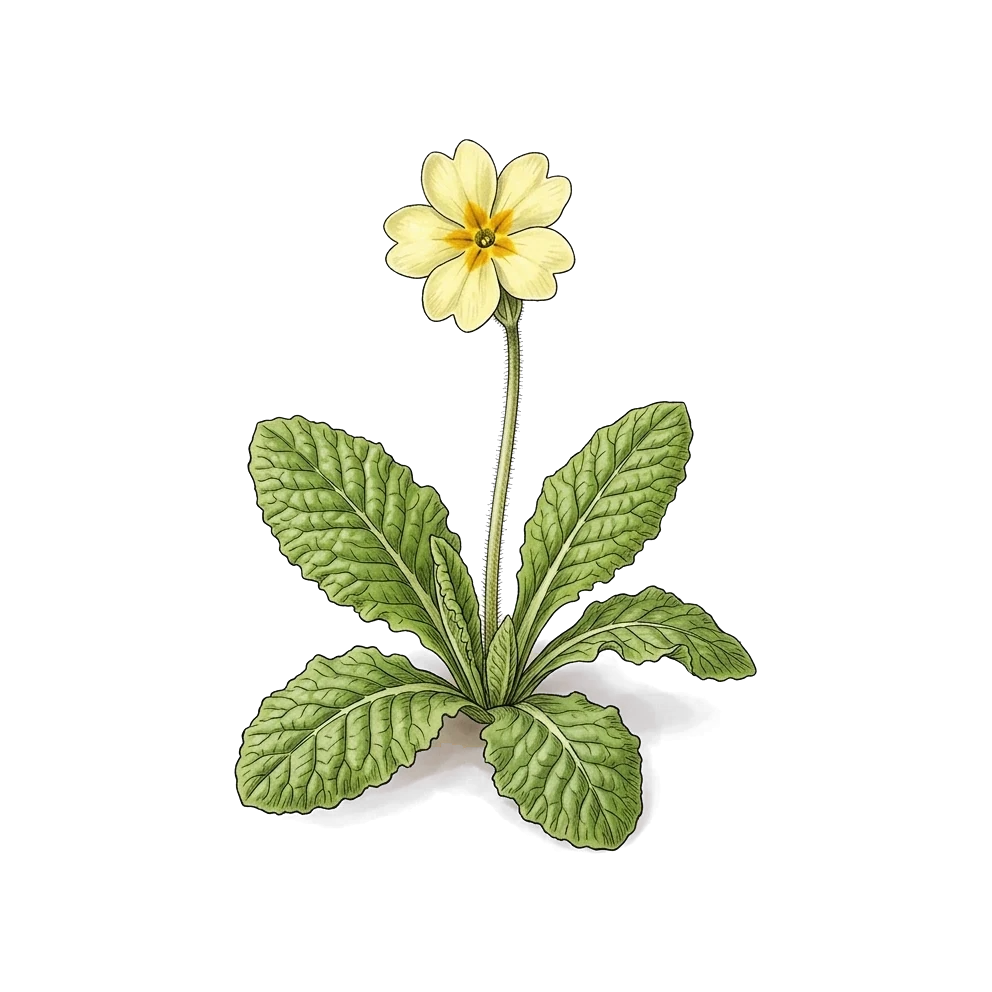
February birth flower meaning by color
Today the violet stands for modesty and loyalty, and the primrose for youth. Violets also carry a meaning for each color, and in Victorian times a gift of violets was a promise to always be true. Kate Greenaway’s 1884 Language of Flowers gives the blue violet faithfulness and the sweet violet modesty.
| Color | Meaning today | Victorian (1884) |
|---|---|---|
| Purple | Truth and loyalty | |
| Blue | Faithfulness and devotion 1884: Faithfulness | |
| White | Innocence and purity | |
| Yellow | High worth 1884: Rural happiness |
- Pale yellow
- Pink
- Purple
- Red
The primrose has one main meaning, youth, but Greenaway gives the red primrose its own: “unpatronized merit,” talent nobody has noticed yet.
History and folklore of violets and primroses
The name violet comes from the Latin viola. The ancient Greeks made the violet a symbol of fertility and love, and medieval monks were said to call it the “Herb of the Trinity” for its three colors: purple, yellow and green. Today four US states have it as their state flower: Illinois, New Jersey, Rhode Island and Wisconsin. Violets have meant far more than modesty, from Sappho’s garlands to Napoleon’s supporters, and our page on what violets symbolize tells the whole story.
The primrose’s genus name, Primula, comes from the Latin primus, first, after its early spring flowers. The ancient Celts were thought to see large patches of primroses as gateways to the fairy realm. In England, April 19 is Primrose Day, the anniversary of Benjamin Disraeli’s death in 1881. His Primrose League marked it by laying primrose wreaths on his grave and his statues. Shakespeare wrote of “the primrose path of dalliance” in Hamlet.
Wild primroses come in two flower forms, pin and thrum, that Darwin studied: see how to tell a pin primrose from a thrum.
Violet vs. primrose: which February birth flower is yours?
| Flower | Meaning | Blooms | Pets |
|---|---|---|---|
Violet Perennial
| Modesty and loyalty 1884: Faithfulness (blue), modesty (sweet) Not in the ASPCA’s plant list | ||
Primrose Perennial
| Youth 1884: Early youth Toxic to dogs, cats and horses |
Today’s lists name the violet first, though either one counts. Both are early spring flowers for a spot in part shade, so the choice comes down to color: purple for the violet birth flower, pale yellow for the primrose.
How to grow violets and primroses
Growing violet
Facts for sweet violet (Viola odorata)
- Type
- Perennial
- Blooms
- Spring
- Sun
- Part shade to dappled shade
- USDA zones
- 4–9
- Native to
- Europe
Growing primrose
- Type
- Perennial
- Blooms
- Winter to spring
- Sun
- Part shade to dappled shade
- USDA zones
- 5–8
- Native to
- Europe and western Asia
Violets grow best in a woodland-style spot with rich soil and steady moisture. They’re cold-hardy but can’t take drought or heat, so give them afternoon shade in warm climates. Primroses dislike full sun. They want morning sun, shade from the afternoon heat and moist, fast-draining soil, and the crown of the rosette should never be buried.
Are violets and primroses poisonous to pets?
Violet
- Pets
- Not in the ASPCA’s plant list The ASPCA’s “African violet” entry is Saintpaulia, a different plant.
- People
- Not listed as poisonous
Primrose
- Pets
- Toxic to dogs, cats and horses
- People
- Listed as poisonous (low severity) Mild vomiting.
In the US, if a pet may have eaten part of a plant, call your vet or the ASPCA Animal Poison Control Center at (888) 426-4435. If a person has, call Poison Control at 1-800-222-1222.
February birth month flower gift ideas
-
A pot of violets
A small potted violet flowers in early spring and suits a shady windowsill or a woodland corner of the garden.
-
Primroses for a spring border
Primroses are among the first flowers of spring, a cheerful February birthday gift for a gardener without pets.
-
A violet-and-primrose print
Purple and pale yellow make a striking pair in a botanical print or a pressed-flower frame.
-
Birth flower jewelry
An enameled violet pendant is a gift that outlasts any bouquet.
Tattoo ideas for February’s flowers
-
A tiny violet
Five petals and a heart-shaped leaf make a small, recognizable design for the wrist or finger.
-
A primrose rosette
A low rosette of leaves with a few flowers suits a round composition on the shoulder or ankle.
-
Purple and yellow in watercolor
The violet’s purple and the primrose’s pale yellow are opposites on the color wheel, so they pop in watercolor.
-
A family posy
A violet and a primrose tied together, joined by the birth flowers of a partner or children.
For fine-line sketches of the violet and primrose you can download, the same designs in three styles, and placements, see our February birth flower tattoo guide.
Violet and primrose colors for parties and design
Violet purple and primrose yellow sit on opposite sides of the color wheel, so they make a lively pair for a February birthday. The codes are below.
- Purple Violet #6A3FA0 rgb(106, 63, 160)
- Blue Violet #4B5FC0 rgb(75, 95, 192)
- White Violet #F4F1F7 rgb(244, 241, 247)
- Yellow Violet #F2CF4A rgb(242, 207, 74)
- Pale yellow Primrose #F4E27A rgb(244, 226, 122)
- Pink Primrose #EE9BB5 rgb(238, 155, 181)
- Purple Primrose #8A4FA8 rgb(138, 79, 168)
- Red Primrose #C8323F rgb(200, 50, 63)