Aries birthstones, list by list
Nobody sets an official Aries stone, so the answer depends on whose list you read. Here are the three old zodiac lists, then the birthstones of the two months Aries spans.
| Stone | Whose list |
|---|---|
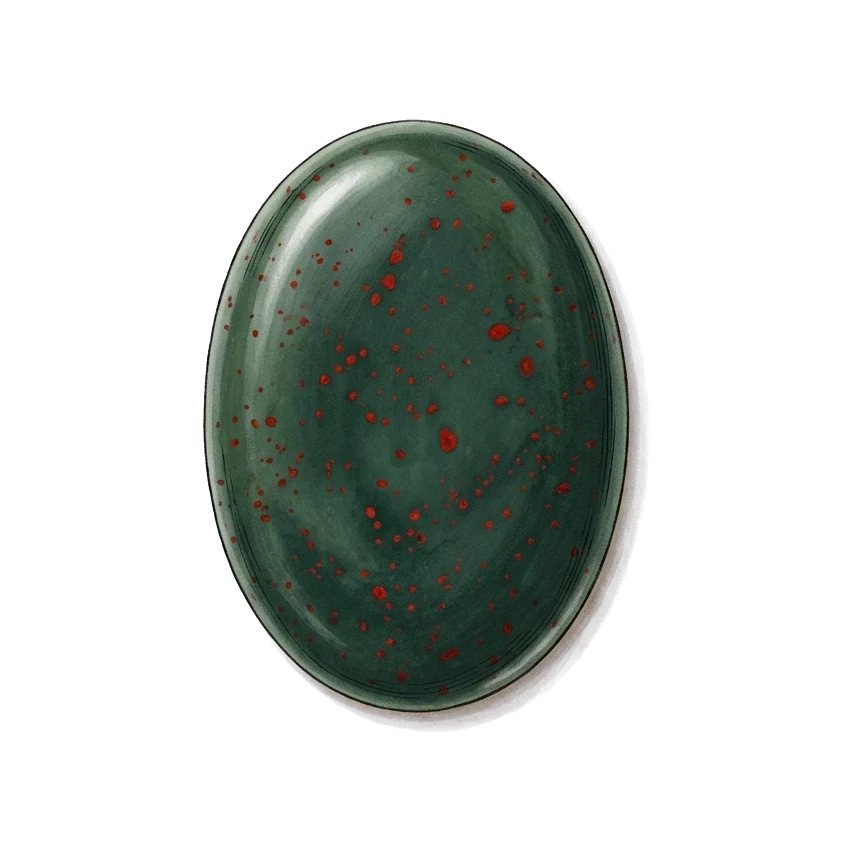
| Bloodstone | Kunz’s verses (1913). George F. Kunz printed it in 1913 as “Zodiacal Gems,” one stone and a short rhyme for each sign. |
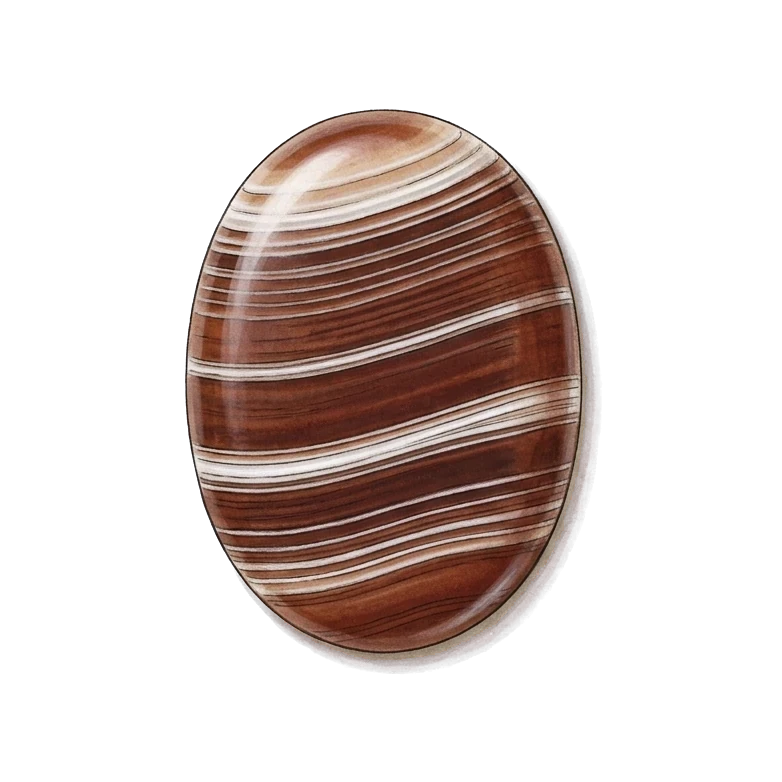
| Sardonyx | Agrippa’s table (1533). Heinrich Cornelius Agrippa’s book of occult philosophy, printed in 1533, sets twelve stones beside the twelve signs in its table of the number twelve. |
| Rock crystal | The Spanish list (1604). From a 1604 Spanish book on gems by Morales, which Kunz quotes and thought probably came from Arab tradition. |
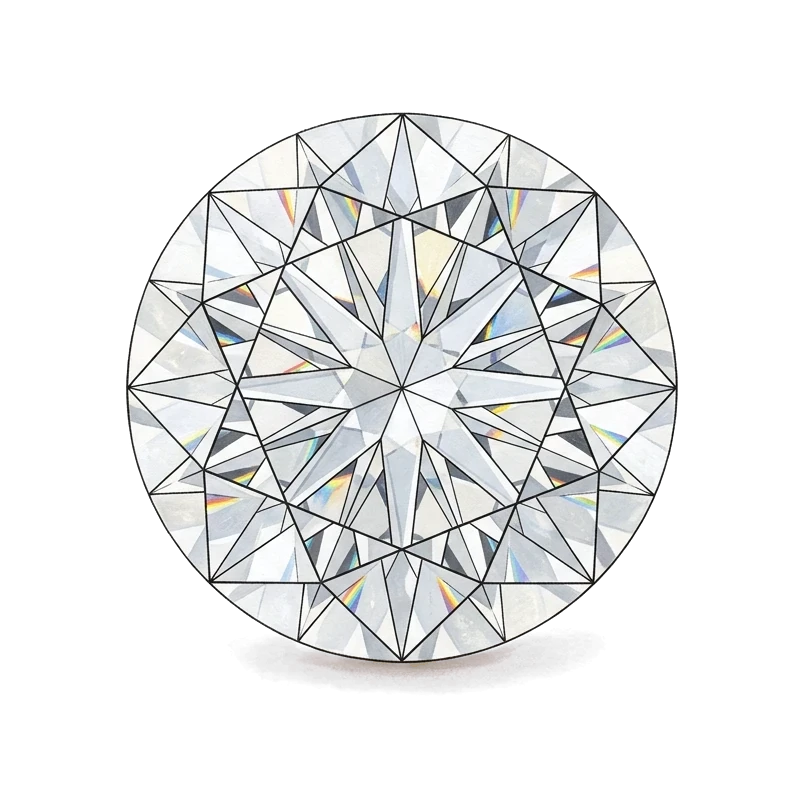
| Aquamarine and bloodstone March 21–31 Diamond April 1–19 | The birth month. The modern US birthstones of March and April, the months Aries’s dates fall in. |

The Aries zodiac stone in Kunz’s 1913 verses is bloodstone: “Who on this world of ours his eyes / In Aries opens shall be wise / If always on his hand there lies / A bloodstone.” The International Gem Society’s zodiac table gives Aries bloodstone too.
Those lines echo another verse Kunz prints. His verse for March begins the same way, “Who on this world of ours her eyes / In March first opens may be wise,” and its stone is also bloodstone. So the sign that starts in March gets March’s stone.
March Aries or April Aries
Aries runs from late March to mid-April, so it touches two months’ birthstones. A March Aries birthstone is aquamarine or bloodstone, and an April Aries birthstone is diamond. Most Aries birthdays fall in April, which is why so many charts give the sign diamond.
So a March Aries can wear bloodstone and have both traditions at once. An April Aries chooses between April’s diamond and the zodiac’s bloodstone.
Aries birthstone colors
Each stone brings its own color, from bloodstone’s dark green and red to the colorless sparkle of diamond and rock crystal.
-
- Dark green
- Red spots
-
- Reddish brown
- White bands
-
Rock crystal, colorless quartz
- Colorless
-
- Light blue
- Sea blue
- Blue-green
-
- Colorless
- Yellow
- Pink
- Blue
Agrippa’s sardonyx and the zodiac verse’s bloodstone are cousins: both are chalcedony, quartz made of crystals too small to see. Sardonyx comes in bands of white and red, bloodstone in dark green spotted with red.
The ram in the stars
In Greek myth, Aries is the ram with the golden fleece that carried the children Phrixus and Helle away from their stepmother. Helle fell into the sea, which became the Hellespont. Hyginus records that the ram gave Phrixus its fleece and rose to the stars of its own accord, which is why the constellation looks dim.
Ovid’s calendar poem marks the day the Sun “set foot on the fleece of the Phrixean sheep,” and says the ram became a constellation while its fleece went to Colchis. The J. Paul Getty Museum has a Roman bronze of a man holding a ram’s head, identified as Phrixus or Jason.
These stars weren’t always a ram. The Babylonian star lists put a “Hired Man,” a farm laborer, in this part of the sky; only later texts and seals show a sheep or a ram. The University of Turin’s history of the zodiac notes that starting the signs with Aries is a leftover from the time its stars marked the spring equinox and the new year.
Why some charts say coral
In Ptolemy’s astrology, from the second century, Aries is one of the two “houses” of Mars. In India’s navaratna, coral stands for Mars, so a chart that gives each sign its planet’s gem gives Aries coral. It’s a planet’s stone, not a sign’s, which is why no older zodiac list has it.
Aries dates and the stars
Aries usually runs from March 21 to April 19, starting at the March equinox. The equinox comes about six hours later each year and a day earlier in leap years, so the start and end of the sign can shift by a day. If you were born on March 20 or 21, or April 19 or 20, check the dates for your birth year.
The constellation itself has moved on. Earth’s slow wobble means the Sun at the March equinox now sits in Pisces, not Aries. The sign, and its stones, stay where tradition put them.